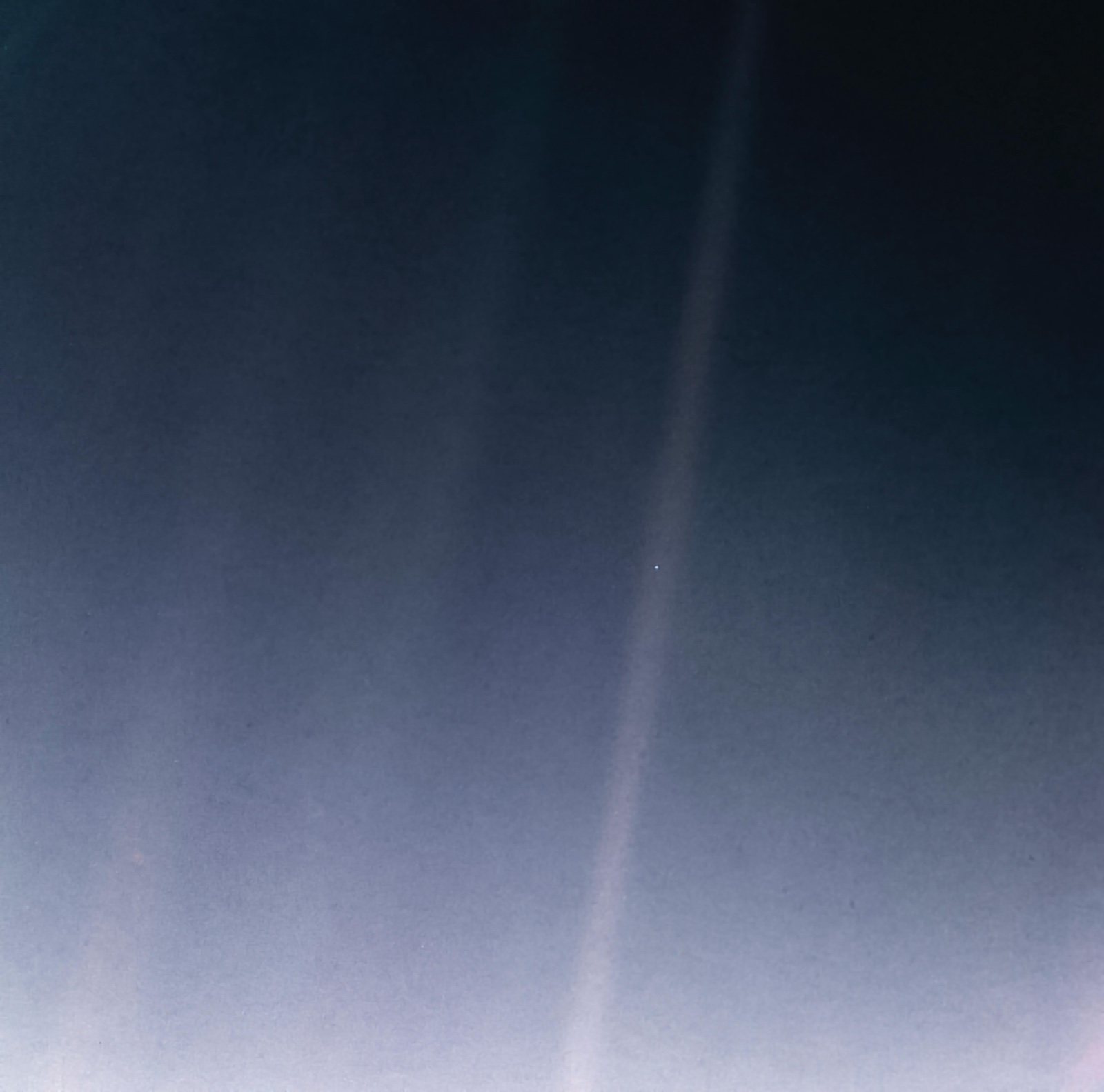
On February 14, 1990, Voyager 1 turned its camera back toward the Sun from six
billion kilometers out and photographed the Earth. Our planet, just
twelve hundredths of a pixel, is what Carl Sagan called "a mote of dust
suspended in a sunbeam."
It took eight years and six separate requests to get that photograph approved.
The Voyager team turned down each of Sagan's requests on sound grounds:
engineering resources were scarce, and aiming the cameras that near the Sun
risked destroying them. Underneath all of it, the image had no obvious
scientific value. There was no case for taking any risk at all.
Thirty-six years on, the Pale Blue Dot stands as a symbol of humanity's
exploration of the cosmos because it gave us perspective on what we thought we
already knew. The same photograph that records how far we had come also shows
how little of the universe we fill. Sagan knew an image can do something a measurement cannot.
I started Genetics of Design to make the Pale Blue Dots that nobody has been
able to justify. We take scientific
data from other fields and plot it in ink, looking for the images those
measurements cannot make on their own.
Nabil Azamy
The Pale Blue Dot photograph was taken by NASA's Voyager 1 on February 14,
1990, at a distance of about six billion kilometers from the Sun. The version
here is Pale Blue Dot Revisited, reprocessed by NASA in 2020 for the picture's
thirtieth anniversary. Courtesy
NASA/JPL-Caltech.